Cartridge Culture: Inside the Dusty Shops Where Physical Gaming Never Died
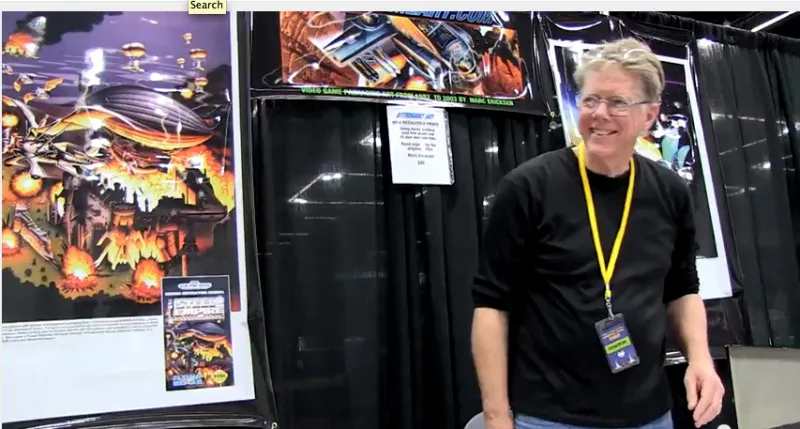
Photo: Ilstrtr75, CC BY-SA 4.0, via Wikimedia Commons
It's sandwiched between a tax prep place and a vape shop in a strip mall that peaked sometime around 1994. The sign out front is hand-lettered. The window display is a chaotic arrangement of cartridges, controllers, and at least one console that a major gaming outlet declared dead twenty-five years ago. Inside, it smells like old plastic and the particular mustiness of electronics that have been in storage since the Clinton administration.
This is not a museum. It's a business. And in 2024, it's doing fine.
While the gaming industry's mainstream narrative has been relentlessly focused on digital-first distribution, subscription models, and the slow death of the physical disc, a parallel economy has been quietly thriving in strip mall storefronts, flea market booths, and church basement swap meets across the United States. The retro game shop is not a relic. It's a subculture with its own economy, its own celebrities, and its own very clear opinion about what gaming lost when it went digital.
The Geography of Physical Gaming
These shops aren't evenly distributed, but they're more common than you'd expect. Every mid-sized American city has at least one. Smaller towns often have them too — sometimes operating out of spaces that don't look like retail at all. A storage unit with a folding table. A back room of a comic shop. A booth at a permanent flea market that's been in the same spot for fifteen years.
The inventory is usually organized by a logic that makes complete sense once someone explains it to you and absolutely no sense at first glance. Cartridges sorted by system, then alphabetically, then by condition. A glass case up front for the valuable stuff — the complete-in-box copies, the rare regional variants, the games that have a dedicated enough collector base to justify the security. A bin near the door with $1 and $5 games for people who just want to browse.
The pricing is where things get interesting. Retro game values have been volatile for years, driven by YouTube exposure, nostalgia cycles, and the occasional viral moment where a game everyone thought was worthless turns out to have a passionate collector community. Shop owners track this in real time — checking sold listings on eBay before they price anything, adjusting based on what's moving locally versus what the national market is doing.
This is not a casual operation. The people running these shops know their inventory better than most people know their own job. They can tell you which copy of a game is worth twice the other copy based on the revision number printed on the back label. They know which controllers are worth repairing and which are parts-only. They've built something that looks like chaos from the outside and is actually a highly specialized retail operation.
Why Collectors Call Cartridges an Act of Resistance
Spend enough time in these spaces and you start hearing a consistent philosophy that goes beyond nostalgia. The people who collect physical games aren't just chasing childhood memories — though that's part of it. They're making a specific argument about ownership, preservation, and what it means to actually have something.
When you buy a digital game, the collector community will tell you, you're licensing it. The platform can revoke access. The game can be delisted. The servers can shut down. The DRM can stop working. You have the game until someone decides you don't.
A cartridge is different. It works as long as the hardware works. It doesn't need a server. It doesn't need an internet connection. It doesn't need anyone's permission. The data is physically in your possession, on a piece of silicon you can hold in your hand. That's not nothing. In an era where publishers have demonstrated repeatedly that they're willing to delete games people paid for, physical media has become a hedge against corporate decisions you can't control.
The collectors who frame it this way aren't wrong. There's a growing list of digital games that simply no longer exist for purchase — licensing deals expired, studios shut down, platforms consolidated. If you didn't buy them when you could, you can't buy them now. The physical versions, meanwhile, are sitting in bins at shops like the one between the tax prep place and the vape shop, completely unbothered by any of that.
The Secondary Market Economy
The retro shop is just one node in a much larger physical gaming economy. The secondary market for games runs through multiple channels simultaneously, and the people who navigate it well have developed genuine expertise.
eBay remains the dominant national marketplace, but local Facebook Marketplace and Craigslist deals are where the real finds happen — sellers who don't know what they have, estate sales that nobody else showed up to, people cleaning out parents' houses who just want the stuff gone. The collectors who do well in this space are the ones who can move fast, know their prices cold, and have the social skills to build relationships with people who'll call them first when something good comes up.
Game conventions and swap meets — events like Portland Retro Gaming Expo, Midwest Gaming Classic, and dozens of smaller regional events — function as gathering points for the physical gaming community. They're part marketplace, part social event, part trade show. You can find things at these events that you won't find anywhere else, sold by people who understand exactly what they have and have priced accordingly.
Flea markets occupy a middle ground. The experienced vendors know their stuff. The random booths selling grandma's old games do not. Both are worth checking, for different reasons.
The Shop as Community Hub
What the online secondary market can't replicate is what happens inside a physical shop. These places function as community centers for people who care about gaming in a way that doesn't translate cleanly to Discord servers or subreddits.
Regular customers develop relationships with the staff. Knowledge gets shared. Someone brings in a game nobody's seen before and the whole shop has an opinion about it. A kid comes in with birthday money not knowing what to buy and gets forty-five minutes of personalized recommendations from a guy who's been playing these games since before the kid was born.
The shops that have survived — and plenty haven't — are the ones that figured out this community function is the actual product. The games are the excuse. The reason people come back is the conversation.
That's something a digital storefront, no matter how well-designed, fundamentally cannot offer. You can't browse a Steam library with a stranger and have them tell you why the third game in that series is actually the best one, or which copy to avoid because of a specific manufacturing defect, or where they picked up a near-mint copy of that thing you've been looking for.
The retro game shop behind the gas station isn't surviving despite the digital era. It's surviving because of what the digital era got wrong.