The Console That Died and Won: How the Dreamcast's Ghost Built Modern Indie Gaming
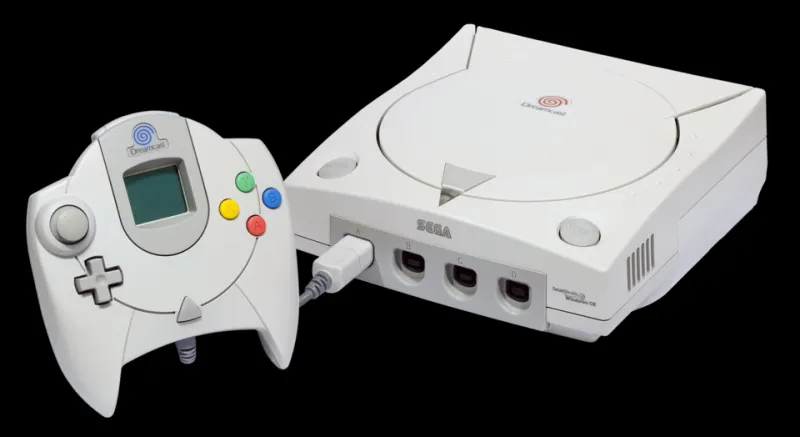
Photo: Asim Saleem (Asim18), CC BY 3.0, via Wikimedia Commons
There's a version of gaming history where the Dreamcast is just a footnote. A bold swing that didn't connect, a casualty of the console wars, a platform that got buried when PlayStation 2 showed up and changed the math entirely. Sega discontinued it in North America in March 2001, and that was supposed to be that.
Except it wasn't. Not even close.
More than two decades later, new Dreamcast games are still being released. The modding community is larger and more active than it's been at any point since the original hardware was on store shelves. And if you spend any time talking to indie developers who came up in the 2000s and early 2010s, you'll hear the Dreamcast's name come up with a reverence that feels almost religious. The failure of the Dreamcast didn't kill independent game culture. It accidentally created it.
What Made the Dreamcast Different
To understand why this machine left such a long shadow, you have to go back to what made it unusual in the first place.
The Dreamcast launched in the US in September 1999 — a year before PS2, almost two years before Xbox — and it arrived with something genuinely strange for a major console: a built-in modem and online gaming support. In 1999. Sega was doing networked play with Phantasy Star Online before most American households had broadband. That wasn't just forward-thinking; it was practically science fiction for a living room gaming device at the time.
But the hardware architecture was the real gift, even if nobody knew it yet. The Dreamcast ran on a relatively open system that was, by the standards of late-90s consoles, surprisingly accessible. The GD-ROM format had weaknesses that the homebrew community identified early. And critically, Sega's own development tools were more approachable than what competitors were offering.
When the console was discontinued, all of that accessibility didn't disappear. It just moved into different hands.
The Homebrew Community That Refused to Quit
By 2002, the Dreamcast had been officially abandoned by Sega. By 2004, the homebrew scene was already publishing original games on self-burned discs that could run on unmodified hardware — no chip, no hack required. That accessibility wasn't an accident. It was baked into the machine's DNA, and the community exploited it completely.
Groups like Beats of Rage developers released free, fully playable beat-em-up engines that ran natively on Dreamcast hardware. Emulation projects brought classic arcade titles to the platform. And slowly, a culture developed around the idea that the Dreamcast wasn't a dead system — it was a liberated one.
Today, labels like Hucast Games and Red Art Games have released polished commercial titles for the Dreamcast in the 2020s. The shoot-em-up genre has found a particularly devoted home on the platform, with new releases that rival the production quality of contemporaneous indie PC games. There are active forums, Discord servers (naturally), and annual game jams specifically targeting Dreamcast development.
For a console that's been off store shelves for over 20 years, that's not nostalgia. That's a living ecosystem.
The Indie DNA Connection
Here's the through-line that doesn't get talked about enough: the developers and designers who came up in early Dreamcast homebrew culture went on to build a significant chunk of the indie game infrastructure that exists today.
The tools, the workflows, the community-first distribution models — a lot of that traces back to scenes that were experimenting on abandoned hardware in the early 2000s. When Xbox Live Arcade launched and suddenly gave indie developers a legitimate commercial pathway, the people best positioned to take advantage of it were often the ones who'd already been building games for platforms nobody was officially supporting.
XBLA's early catalog — Geometry Wars, Pac-Man Championship Edition, Castle Crashers — shares a spiritual DNA with the tight, arcade-focused design philosophy that defined the best Dreamcast software. That's not coincidence. It's a direct line of influence running through a generation of developers who learned their craft on machines that the industry had written off.
The same ethos shows up in the modern indie scene's love of tight controls, arcade-style scoring systems, and games that don't need 80 hours to be worth playing. Celeste, Shovel Knight, Neon Abyss — these games feel like Dreamcast games in a way that has nothing to do with graphics and everything to do with design philosophy.
What the Dreamcast Story Actually Means
The easy read on the Dreamcast is tragedy. Sega bet big, lost, and exited the hardware business forever. That's true, and it genuinely was a loss — for competition, for innovation, for a company that had spent a decade being the most interesting voice in the console space.
But the harder, more interesting read is that the Dreamcast's failure was a kind of liberation. When Sega walked away, the community didn't have to negotiate with anyone. There were no corporate roadmaps, no platform holder approval processes, no monetization requirements. Just hardware, tools, and people who loved the machine enough to keep building for it.
That freedom — messy, informal, occasionally chaotic — is exactly the environment where creative risk-taking thrives. And the indie game scene that emerged from it has consistently outpaced the corporate gaming industry on pure creative terms, even when it can't compete on budget.
The Dreamcast didn't succeed despite its failure. It succeeded because of it. And in 2024, with the indie scene more crowded and more vital than ever, that lesson feels more relevant than it did when Sega was counting the losses.
Some things don't die. They just go underground and come back stronger. Around here, we respect that kind of staying power.