Same Game, Different Planet: How Regional Licensing Is Quietly Splitting Gaming's Global Community in Half
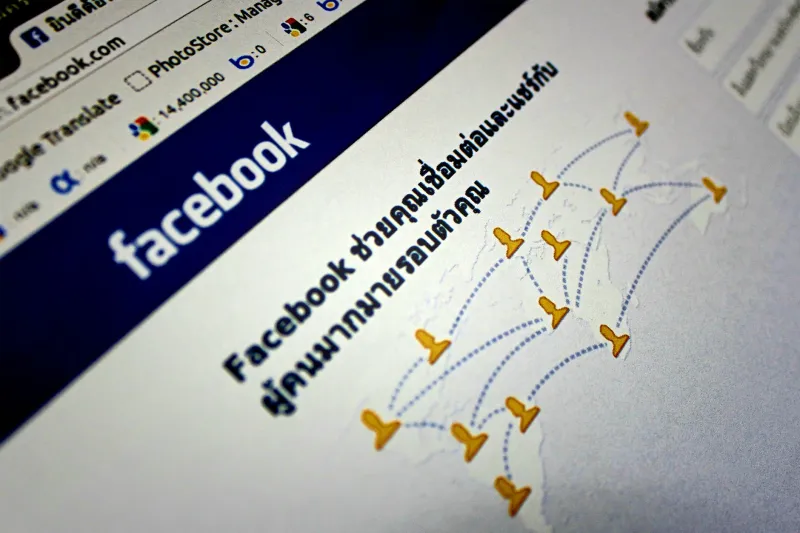
Imagine finding out your favorite streamer has been playing a game for six months straight — a game with a massive international following, dedicated speedrun categories, active Discord servers, the whole thing — and you literally cannot buy it. Not because it's rare. Not because it's old. Because a licensing agreement somewhere decided your ZIP code puts you on the wrong side of an invisible wall.
That's not a hypothetical. That's Tuesday for a significant chunk of the gaming world, and it's getting worse.
The Invisible Borders Nobody Talks About
Geo-blocking in gaming isn't new. Region-locked cartridges go back to the NES era, and anyone who grew up importing Japanese games knows the particular frustration of staring at hardware that physically refuses to cooperate. But the modern version is sneakier, and in a lot of ways more damaging, because it hides behind the illusion of a connected digital marketplace.
When a game hits Steam or the PlayStation Store, the assumption is that it's available — globally, instantly, for everyone. The reality is a patchwork of regional licensing agreements, publisher distribution deals, content rating requirements, and local regulatory compliance that means the same title can be fully playable in Texas, partially available in Germany, completely absent in Australia, and running on a different server infrastructure in Southeast Asia that changes how the game actually performs.
For casual players, this is annoying. For competitive communities, streamers, and speedrunners trying to build a unified culture around a single game, it's quietly catastrophic.
What This Actually Does to Streaming Culture
Streaming runs on shared reference points. The reason Twitch categories work — the reason a game blows up — is because viewers can watch, then immediately go buy and play the thing they just saw. The feedback loop between streamer and audience depends on accessibility. Break that loop, and you don't just lose potential players; you fracture the community before it can fully form.
Take a mid-tier RPG that launches with strong buzz in Japan and Korea but gets a staggered Western release with content cuts required to pass ESRB or PEGI ratings. By the time the US version drops, the international community has already built the meta, run the speedruns, found the exploits, and moved on. American players arrive late to a party that's technically still happening but feels like everyone else already knows the inside jokes.
That gap isn't just cultural lag — it actively devalues the US gaming community's contribution to the global conversation around that title. And streamers who try to bridge it by importing foreign versions or using VPNs to access region-locked content find themselves in murky legal territory that most platforms aren't interested in clarifying.
The Speedrun Problem Nobody Wants to Acknowledge
Speedrunning communities live and die by consistency. A world record only means something if everyone is playing the same game. But regional versions often aren't the same game — different loading times based on server locations, text differences that affect dialogue skip strats, content patches that roll out on different schedules in different territories, and in some cases entirely different builds with mechanics that don't exist in other regions.
The speedrunning community has developed workarounds — separate leaderboard categories for regional versions, emulation standards that try to normalize the playing field — but these are duct-tape solutions to a structural problem. When a Japanese PC version of a game runs fundamentally faster than the North American console version because of how the regional publisher handled the port, you don't have one game anymore. You have two games wearing the same name, and the community has to decide which one is real.
Some communities split cleanly and move on. Others never recover the unified identity that made them worth following in the first place.
The VPN Gray Zone
The open secret in international gaming circles is that VPN usage to circumvent regional restrictions is widespread and largely tolerated — until it isn't. Platform terms of service universally prohibit using VPNs to access content not licensed for your region, but enforcement is inconsistent to the point of being almost random. Some players run this way for years without issue. Others get accounts flagged or purchases revoked with no warning and no recourse.
For streamers specifically, this creates a real risk calculation. Broadcasting yourself playing a region-locked game on Twitch or YouTube is a public record of a potential ToS violation. Most platforms won't act on it unless a rights holder complains — but rights holders absolutely do complain, and when they do, the streamer eats the consequences alone. The platform isn't going to go to bat for you.
Smaller content creators in markets like Southeast Asia, Latin America, and Eastern Europe — regions that routinely get delayed or modified releases — are disproportionately exposed to this. They're the ones most likely to be navigating regional restrictions out of necessity, and the least likely to have legal resources if something goes wrong.
What Publishers Actually Want From This
It's worth being direct about the incentive structure here. Regional licensing fragmentation isn't accidental — it's the byproduct of a publishing model built around maximizing revenue extraction from each individual market. Different pricing tiers, different content standards for different regulatory environments, exclusive distribution partnerships that vary by region — all of this makes business sense on a spreadsheet.
What it doesn't account for is the cultural cost of atomizing a global player base. When a game's community is fractured by geography before it even reaches peak momentum, the ceiling on that community's long-term engagement drops significantly. The games that build truly enduring global cultures — your Minecrafts, your Dark Souls, your Counter-Strikes — are the ones where access friction was low enough that the community could actually form organically across borders.
The irony is that publishers are actively undermining the conditions that create their most valuable long-term communities in pursuit of short-term regional revenue optimization.
The Underground Keeps Moving
Predictably, the communities most affected by regional fragmentation have gotten creative. Private Discord servers coordinate region-hopping strategies. Fan translation groups keep older region-locked titles accessible. Emulation scenes maintain builds of games that were never officially released in certain markets. The infrastructure for navigating these invisible borders exists — it's just distributed, informal, and technically against the rules.
This is where Triple Six Underground's bread and butter lives. The gaming world that actually operates — the one keeping history alive, bridging regional gaps, and refusing to let licensing agreements determine what's worth playing — runs parallel to the official version. It always has.
The question worth asking is whether publishers will eventually recognize that their own fragmentation strategies are feeding that underground ecosystem, or whether they'll keep drawing borders and wondering why the map keeps getting redrawn without them.


